
Willow & Bats
English Willow vs Kashmir Willow: Which Cricket Bat Is Right for You?
Both are willow, both are made for the leather ball, but they behave very differently in your hands. Here is how to choose between them.
By HUMAX Cricket Editorial Team · · Updated · 7 min read
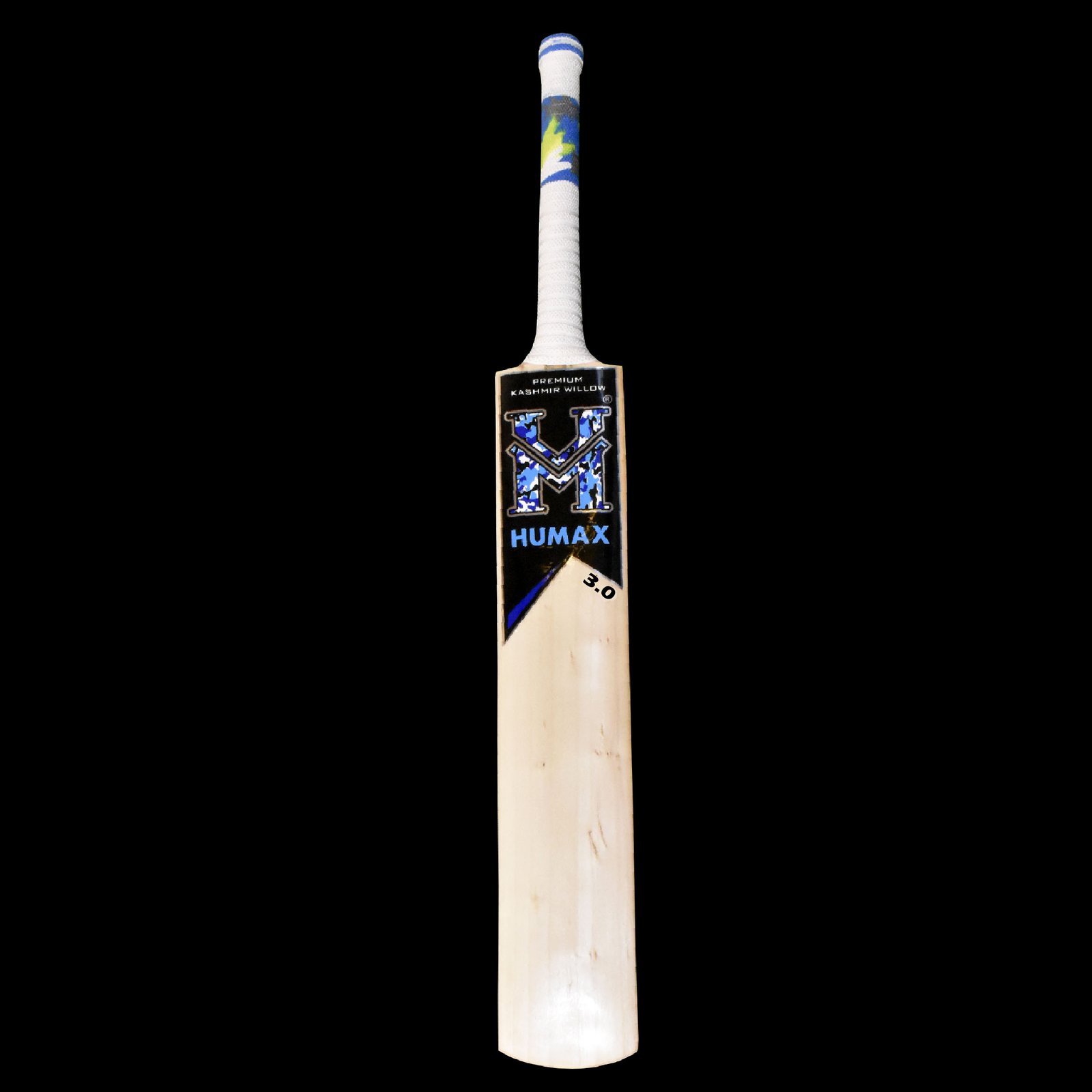
Every leather-ball cricket bat starts as a piece of willow, but not all willow is the same. The two timbers you will see most often in India are English willow and Kashmir willow. They look similar once the stickers are on, yet they differ in how they are grown, how they feel when you pick them up, and how they respond when the ball hits the middle. Choosing the right one depends on how often you play, the level you play at, and how much you want to spend.
Where the two willows come from
English willow (Salix alba var. caerulea) is grown mainly in England and is the timber used for the bats you see in first-class and international cricket. Kashmir willow comes from the Kashmir valley in India. It is a related species, but it grows in a different climate and generally produces denser, harder wood.
That difference in density drives almost everything else: weight, feel, durability and the amount of preparation a bat needs.
Weight and pickup
Because English willow is lighter for its volume, a bat maker can leave more wood in the profile (thicker edges, a fuller spine) without the bat becoming too heavy to control. Kashmir willow is denser, so a bat of a similar shape usually weighs more, or the maker has to remove wood to bring the weight down.
In the HUMAX catalogue the published weight ranges show this clearly. English willow models such as the Prism range are listed at approximately 1150–1220 g and the Arjun range at approximately 1130–1199 g, while the Kashmir willow K.W. series is listed at approximately 1200–1280 g and the big-edged Pinaka bats at approximately 1250–1350 g.
Feel and performance
English willow is softer and more fibrous. Properly pressed and knocked-in, it compresses slightly on impact and springs back, which is what players describe as “ping”. Kashmir willow is harder and drier, so it typically offers less rebound and a firmer feel through the hands. This is general guidance about the two timbers rather than a guarantee for any individual bat: every piece of willow is different.
Durability and preparation
Kashmir willow’s density makes it tough, which is one reason it is popular for nets, school cricket and players who are still developing. English willow bats need careful knocking-in and care because the softer fibres can crack if the bat is used against a hard ball before it is ready. Both types benefit from an anti-scuff sheet and fibre tape, and both should only be used with good-quality leather balls.
Higher price does not mean longer life. HUMAX’s own warranty guidance notes that more expensive bats are often made of softer willow: they usually perform better but may not last as long.
Grades: comparing like with like
Both willows are graded by appearance: the number and straightness of the grains, the amount of heartwood (the darker, reddish wood) and visible blemishes. HUMAX publishes the grade, minimum grains and maximum heartwood for every bat. For example, the Kashmir willow K.W. Players is listed with a minimum of 8 grains and up to 30% heartwood, while the English willow Prism Signature is Players Grade with a minimum of 8 grains and up to 30% heartwood.
Quick comparison
| English willow | Kashmir willow | |
|---|---|---|
| Density | Lighter, softer | Denser, harder |
| Typical feel | More rebound when prepared | Firmer, less rebound |
| Durability | Needs careful preparation | Generally hard-wearing |
| Best suited to | Regular competitive leather-ball cricket | Practice, school and club cricket, value buyers |
| Price | Higher | Lower |
So which should you buy?
- Choose Kashmir willow if you are starting with the leather ball, play mainly in the nets or school matches, or want a durable bat at a lower price.
- Choose English willow if you play competitive matches regularly and want the lighter pickup and responsiveness the timber is known for.
- If you are between the two, look at a lower English willow grade. Grades describe looks as much as performance, so a Grade 3 or 4 English willow bat can be an excellent playing bat.
Whichever timber you choose, pick a weight you can control through your full range of shots, and prepare the bat properly before using it with a new hard ball.
Shop HUMAX English willow bats