
Buying Guides
Cricket Bat Buying Guide: Grades, Grains, Profiles and More
Grains, heartwood, duck-bill, double-pressed: the vocabulary of cricket bats explained, so you can compare bats with confidence.
By HUMAX Cricket Editorial Team · · Updated · 9 min read
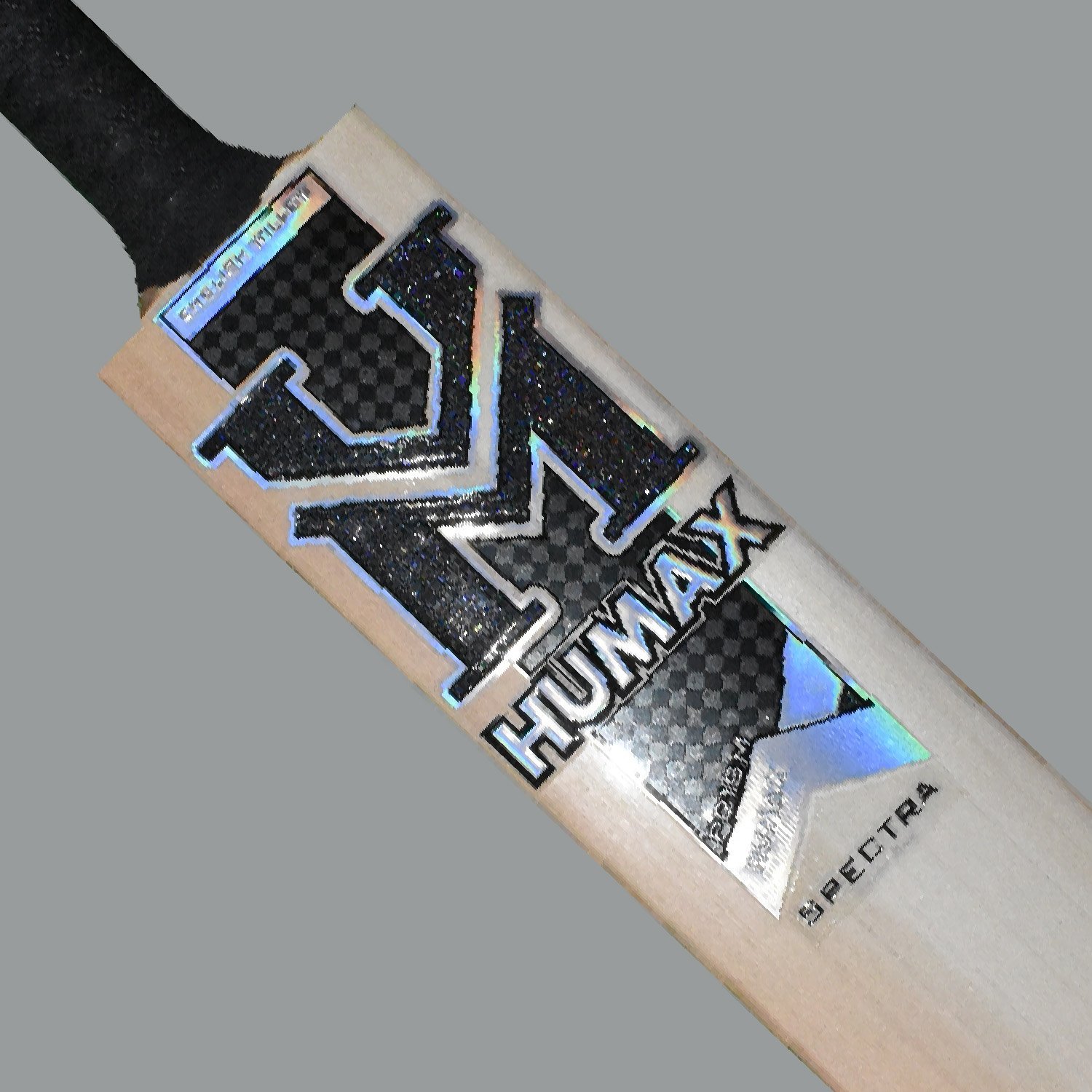
Buying a cricket bat online means reading specifications rather than feeling the bat in your hands. That is only useful if you know what the terms mean. This guide explains the language of bat-making and shows you how to read the specification table on every HUMAX bat page.
1. Willow type
English willow is lighter and softer and is the standard for competitive leather-ball cricket. Kashmir willow is denser and harder-wearing and offers great value for practice and club cricket. HUMAX makes bats in both, and every HUMAX bat is designed for the leather ball.
2. Grade
Willow is graded mostly by appearance. Higher grades have more, straighter grains, less heartwood and fewer blemishes. HUMAX uses Players Grade at the top, then Grade 1 through Grade 5 for English willow, and Grade 1 to 3 for Kashmir willow. A lower grade does not automatically mean a poor bat; it often means a less “perfect” looking piece of willow at a lower price.
3. Grains
Grains are the vertical lines on the face of the bat, the annual growth rings of the tree. HUMAX publishes a minimum grain count for every bat (for example 8+ on the Prism Signature, 6+ on the Reserve Edition, 3+ on the Premium and Supremo). More grains is generally associated with higher grade willow; it is one indicator among several.
4. Heartwood
Heartwood is the darker, reddish wood from the centre of the tree. It is harder and drier than the white sapwood. HUMAX states the maximum heartwood you may see on each model, from up to 20% (Siddy Gold Brahmos) to up to 90% (Premium and Supremo). Heartwood is largely cosmetic but is part of how willow is graded.
5. Profile
- Duck-bill: the spine tapers down to the toe, keeping wood in the middle while saving weight towards the toe. Used on many HUMAX English willow bats.
- Traditional or conventional: a more even distribution of wood, with the middle often a little lower. Used on Pinaka and offered on several other models.
- Low, full profile: wood concentrated low in the blade. HUMAX’s Master Blaster is described as low and full with no concave.
6. Edges, toe and concave
Thicker edges leave more wood around the sweet spot. HUMAX publishes edge thickness where it is specified (for example 34–39 mm on the Prism range, 35 mm+ on Pinaka). Concave is wood scooped from the back to save weight. Most HUMAX bats have minimal concave, and the Master Blaster has none. The face can be semi-round or semi-flat.
7. Pressing
Pressing compresses the face of the bat. HUMAX describes most of its bats as double-pressed. The Arjun and Fiend ranges are single-pressed so more wood can be removed for lighter weights, and Siddy Gold has very hard pressing.
8. Handle and size
HUMAX bats use Singapore cane handles (the Tejas MK1 is listed with a Singapore or Assamese cane handle). Where a size is listed, HUMAX bats are Full Size SH (short handle). See our size guide if you are unsure.
How to read a HUMAX specification table
| Row | What it tells you |
|---|---|
| Willow / Grade | Timber and appearance grade |
| Grains | The minimum number of grains HUMAX states for the model |
| Heartwood | The maximum heartwood you may see |
| Weight | An approximate range; individual bats vary |
| Edges / Toe | Thickness where HUMAX specifies it |
| Profile / Face / Concave | How the wood is distributed |
| Pressing / Handle | Construction details |
On multi-grade ranges such as Siddy Gold and Master Blaster, the table updates when you choose a model, so you can see that model’s grade, grains and heartwood.
Specifications describe the willow and construction; they are not a performance guarantee. Natural willow varies from bat to bat, and every HUMAX bat carries a 3-month warranty with no guarantee against blade breakage.
Putting it together
- Decide on willow type from how often and at what level you play.
- Set a budget, then choose the highest grade that fits it.
- Choose a weight you can control.
- Pick a profile that suits your game.